
What Causes Gum Recession
Gums can recede for several reasons: gum disease, brushing too hard, thin gum tissue you were born with, grinding or clenching, orthodontic tooth movement, or a lip or cheek attachment that pulls on the gum. Once gum tissue is lost, it doesn't grow back on its own.
- Teeth that look longer than they used to
- Sensitivity to cold, especially near the gumline
- A notch you can feel where the tooth meets the gum
- Roots that look darker or yellower than the rest of the tooth
How a Gum Graft Works
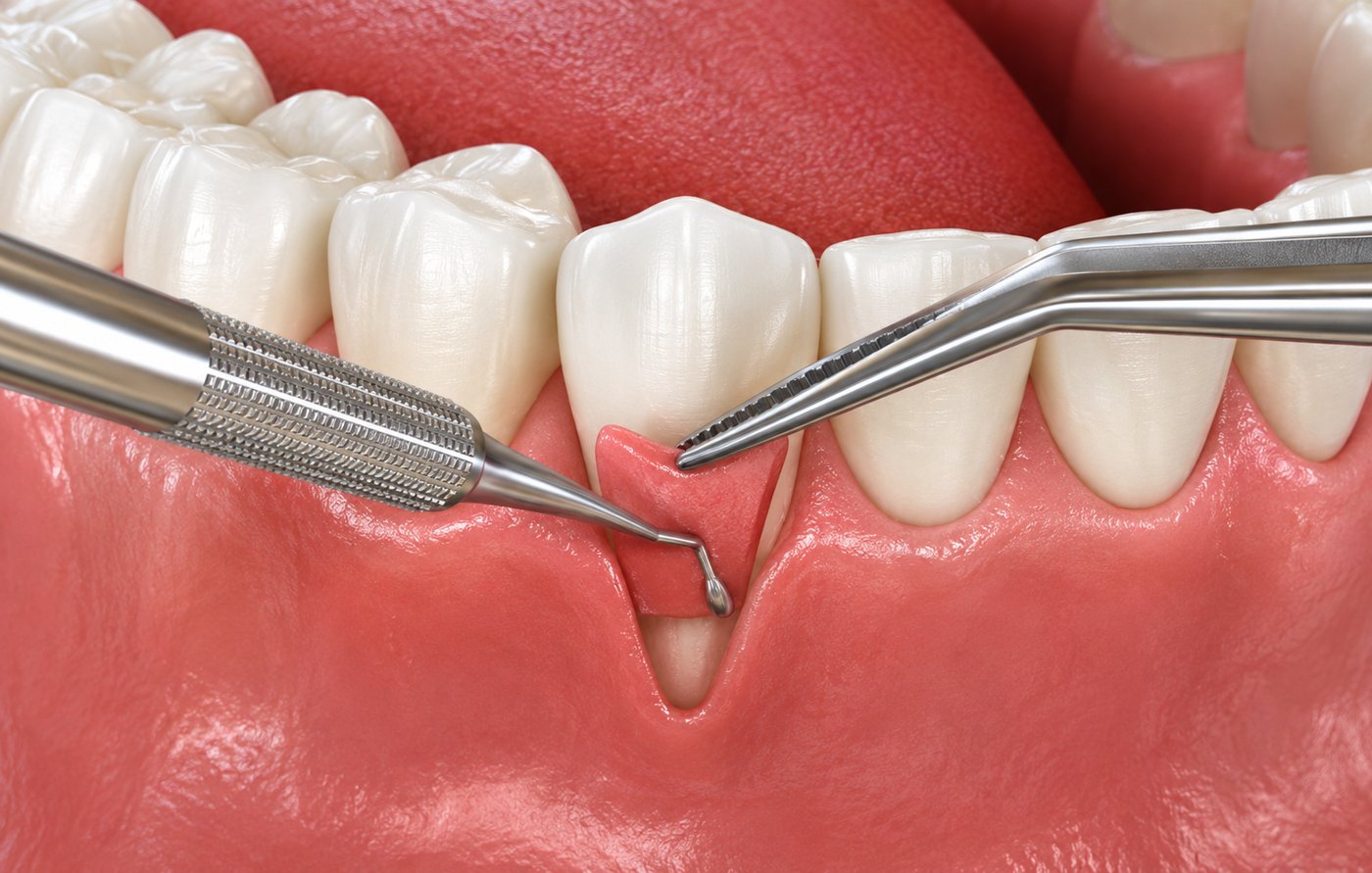
In a connective tissue graft, a small piece of tissue is taken from under the surface of the roof of your mouth and placed over the exposed root, then secured with fine stitches. In some cases donor tissue can be used instead, so there's no second site to heal.
The graft thickens the gum, covers the root and gives the tooth a stronger band of protective tissue. Dr. Serrano will recommend the approach that fits the amount of recession and the thickness of your gums.
Recovery
- First few daysExpect some tenderness and mild swelling. Soft, cool foods and the pain relief we recommend help.
- First two weeksAvoid brushing or flossing the graft area and chewing on that side. We'll give you a rinse to keep it clean.
- Follow-upWe check healing and remove stitches if needed, usually within one to two weeks.
- Full healingThe graft continues to mature over the following weeks, blending in with the surrounding gum.
Preventing Further Recession
We'll also look at what caused the recession so it doesn't keep happening: a softer brushing technique, treating gum disease with a deep cleaning, or a night guard if grinding is part of the picture.
Gum Grafting at Our Newton Office
- Performed by periodontist Dr. Milagros Serrano, a member of the American Academy of Periodontology
- Connective tissue grafts and donor tissue options
- Planned together with any crowns, veneers or orthodontic work you're considering
- Clear written aftercare and follow-up visits