
An Alternative for People Who Struggle With CPAP
CPAP machines work well for many people with sleep apnea. They also come with a mask, a hose and a motor on the nightstand, and some patients simply can't get used to them. The mask leaks, the air feels dry, or it ends up on the floor by 2 am.
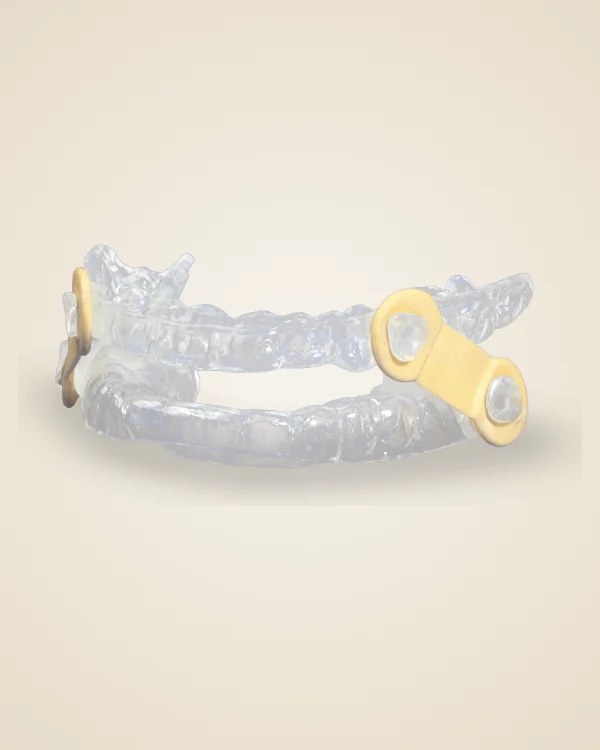
An oral appliance is a smaller option. It looks a bit like a sports mouth guard, it's made for your teeth, and it fits in a case you can take on a trip. For the right patient, it can be a practical way to treat snoring or mild to moderate obstructive sleep apnea.
How an Oral Appliance Keeps the Airway Open
During sleep, the muscles in the throat relax. In obstructive sleep apnea, the tongue and soft tissue fall back far enough to narrow or block the airway, and breathing pauses until the brain briefly wakes you. Snoring is the sound of air squeezing through that narrowed space.
Oral appliances change the position of the jaw or tongue so there's more room to breathe:
- A mandibular advancement device (MAD) gently moves the lower jaw forward, which pulls the tongue forward with it.
- A tongue-retaining device (TRD) holds the tongue itself in a forward position.
Dr. Kaceli will recommend the type that suits your teeth, your jaw and your diagnosis.
Diagnosis Comes From a Sleep Physician
Sleep apnea is a medical diagnosis, so it starts with a physician and usually a sleep study. Untreated sleep apnea is linked to other health problems, and that's why it's worth confirming rather than guessing.
Our practice works with Dr. Adrian Velasquez, MD, a board-certified sleep physician and owner of Sleep Better Clinic, on referrals and sleep studies. Dr. Kaceli is a member of the American Academy of Dental Sleep Medicine (AADSM), a professional group for dentists who treat sleep-related breathing problems with oral appliances.
From Evaluation to a Good Night's Fit
- EvaluationDr. Kaceli reviews your sleep history and any sleep study results, then examines your teeth, gums and jaw.
- Choosing an applianceShe explains the options and which one makes sense for you.
- ImpressionsImpressions of your teeth go to a dental lab, where the appliance is custom made.
- FittingAt the fitting visit, the appliance is checked for comfort and you'll practice wearing and cleaning it.
- AdjustmentsFollow-up visits fine-tune the position over the first weeks as you get used to it.
- Ongoing monitoringAnnual checks make sure the appliance still fits and your teeth and bite stay healthy.
Side Effects and Daily Care
Most side effects are mild and tend to ease as you adjust. Some patients notice jaw soreness in the morning, extra saliva or a slight change in their bite. Let us know at your follow-up so Dr. Kaceli can adjust the appliance.
Clean the appliance each morning with a soft toothbrush and mild soap or denture cleaner, then let it dry and keep it in its case. Bring it to your dental cleanings in Norwood so it can be checked too.
Why Choose Kaceli Dental Studio in Norwood?
Treating sleep apnea well takes two kinds of expertise. Dr. Velasquez and Sleep Better Clinic handle the sleep testing and medical side. Dr. Kaceli, an AADSM member, handles the appliance, its fit and the follow-up.
Our Norwood office serves patients from Norwood, Westwood, Dover and Needham. Saturday appointments once a month make the follow-up visits easier to fit in, and financing through Cherry and Sunbit is available.