

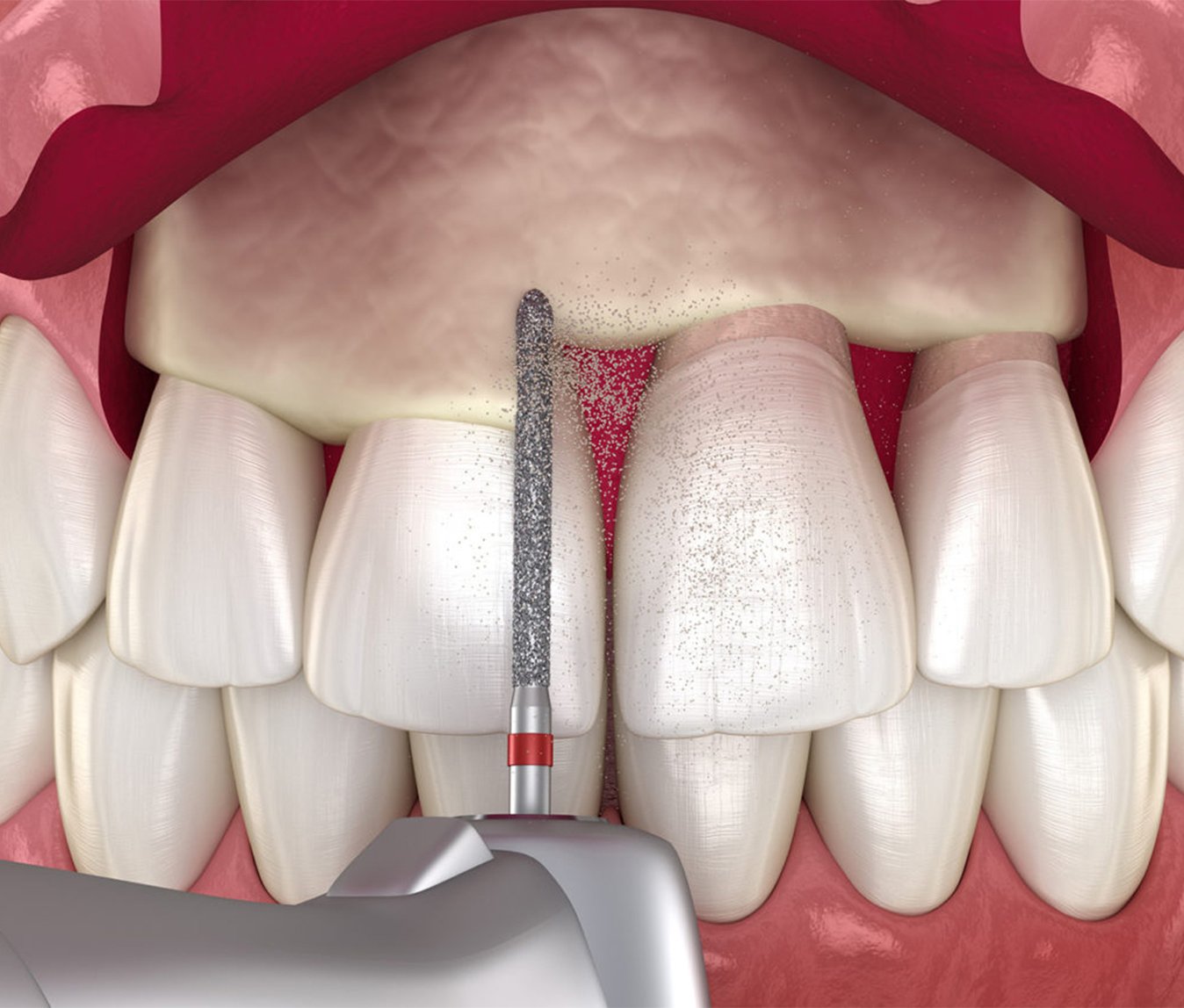
Why Crown Lengthening Is Done
- To save a damaged toothWhen decay or a fracture reaches at or below the gumline, a crown needs more healthy tooth to grip. Crown lengthening provides it, so the tooth can be kept instead of extracted.
- To fit a crown properlyGums need a small amount of space above the bone to stay healthy around a crown. Crown lengthening creates that space so the crown doesn't irritate the gum.
- To correct a gummy smileIf teeth look short because gum covers too much of them, reshaping the gumline can make teeth look more proportional, sometimes alongside veneers.
What the Procedure Involves
After the area is numbed, the gum is gently reshaped. If more tooth needs to be exposed, a small amount of bone is also recontoured. The gum is then secured in its new position, usually with a few stitches.
It's typically done in one visit and may involve one tooth or several, depending on the reason.
Healing and Your Final Crown
Expect some tenderness and mild swelling for a few days. You'll get a rinse and instructions for keeping the area clean while it heals.
The gums need time to settle into their new position before the final crown is made, usually several weeks and sometimes up to a few months for front teeth, where appearance matters most. A temporary crown can protect the tooth in the meantime.
Crown Lengthening at Our Newton Office
- Planned by Dr. Monika Kaceli together with periodontist Dr. Milagros Serrano
- Your gum surgery and final crown coordinated in one practice
- Digital X-rays and 3D imaging to plan precisely
- Focused on keeping your natural tooth whenever possible